Interactive installation · Master’s thesis · 2025
Digital Self
Talk to your digital self. A booth clones your face and your voice and lets you speak with a younger, same-age or older version of yourself.
- Role
- Concept, design, technical build, set-up
- Context
- Master’s thesis, RheinMain University of Applied Sciences
- Tools
- ComfyUI, TouchDesigner, Stable Diffusion, ReActor, F5-TTS, FLOAT
- Exhibited
- See Conference, Wiesbaden · WDC Campus, Museum Angewandte Kunst, Frankfurt
What it is about
Deepfakes are almost always discussed as a threat: fraud, fake news, identity theft. All of that is true, and I covered it in depth in my thesis.
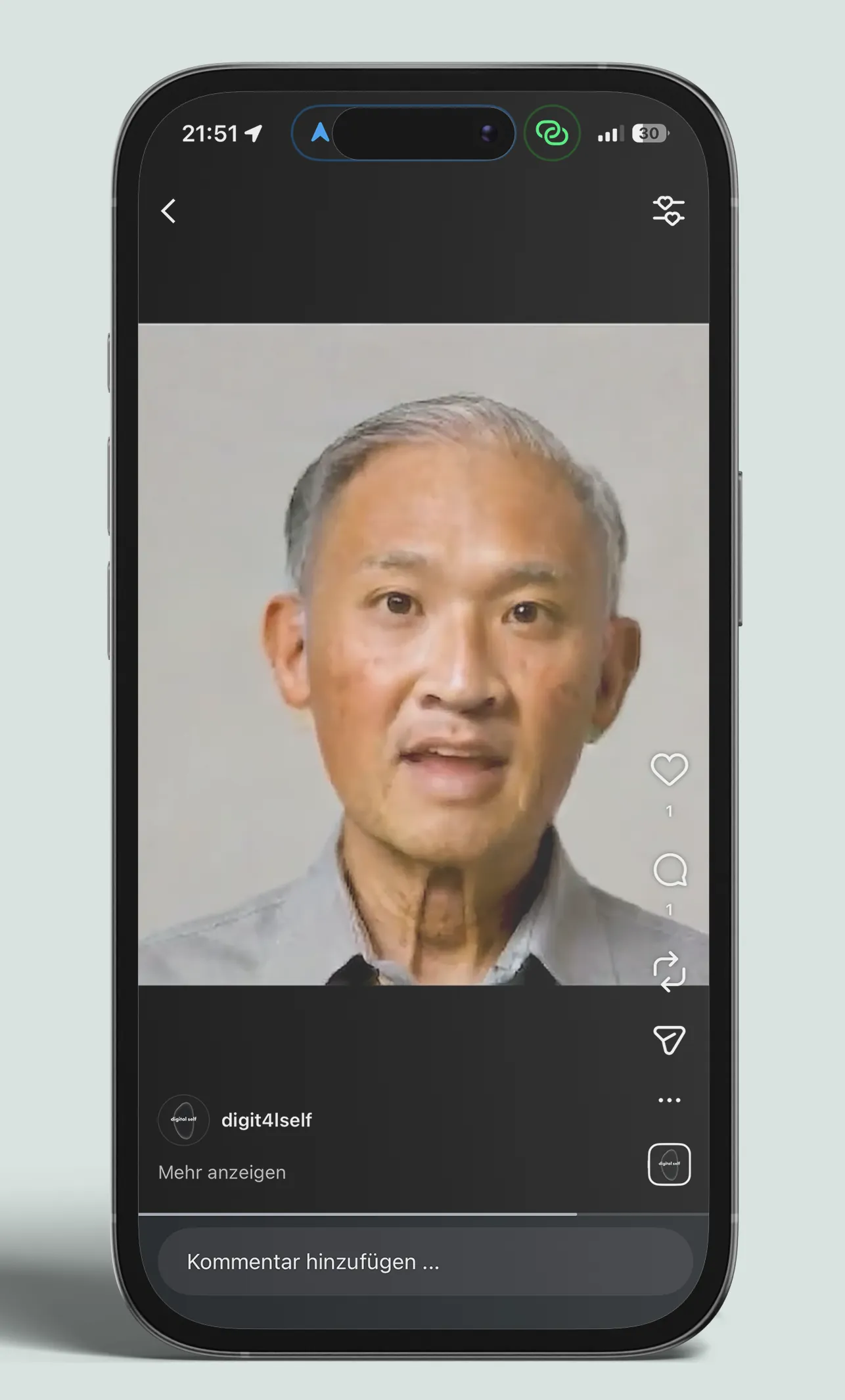
I still wanted to show the other side. The same technology can trigger something positive once you experience it yourself. In Digital Self you meet yourself: the way you used to look, the way you look today, or the way you might look later.
How it works
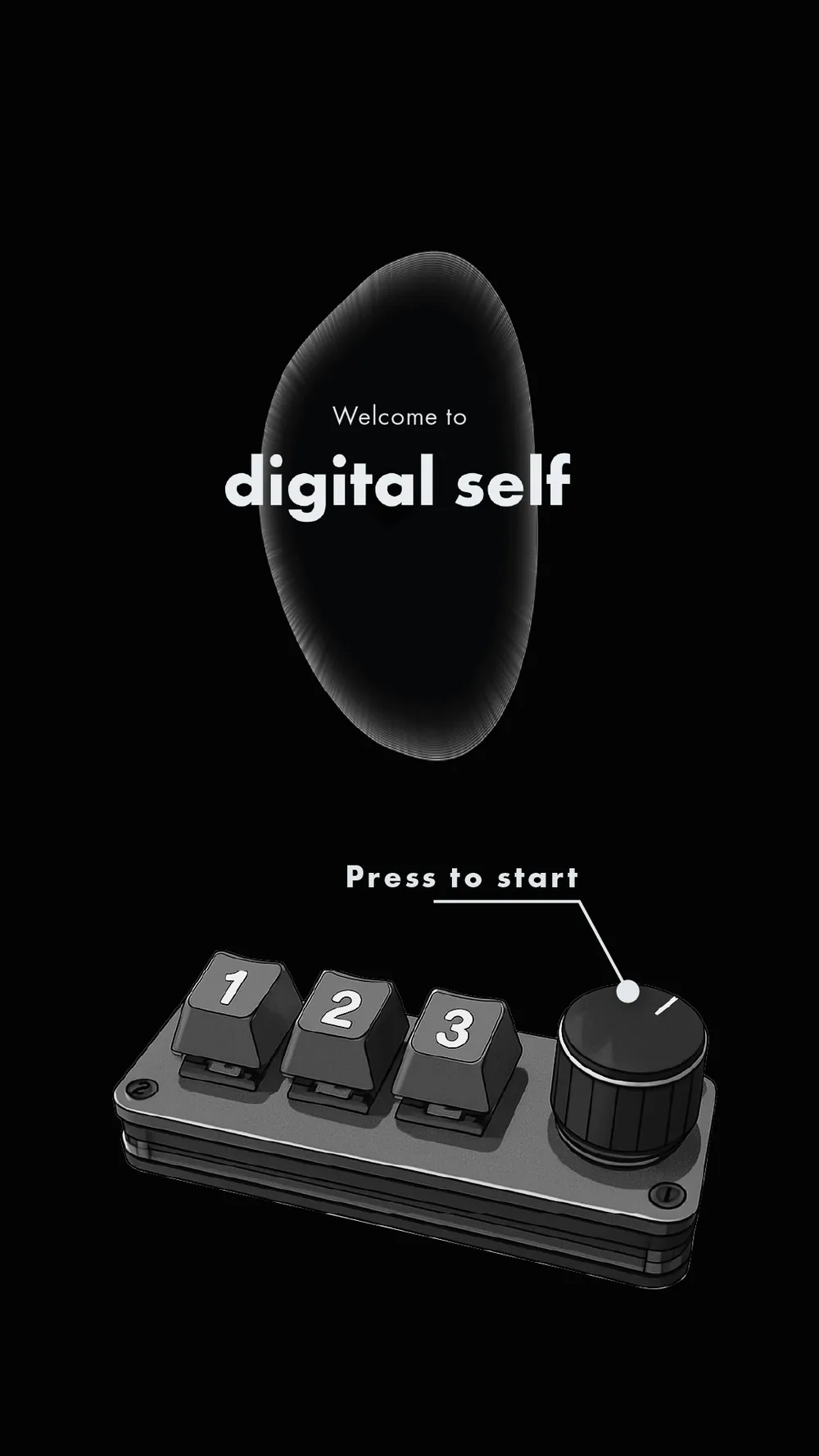
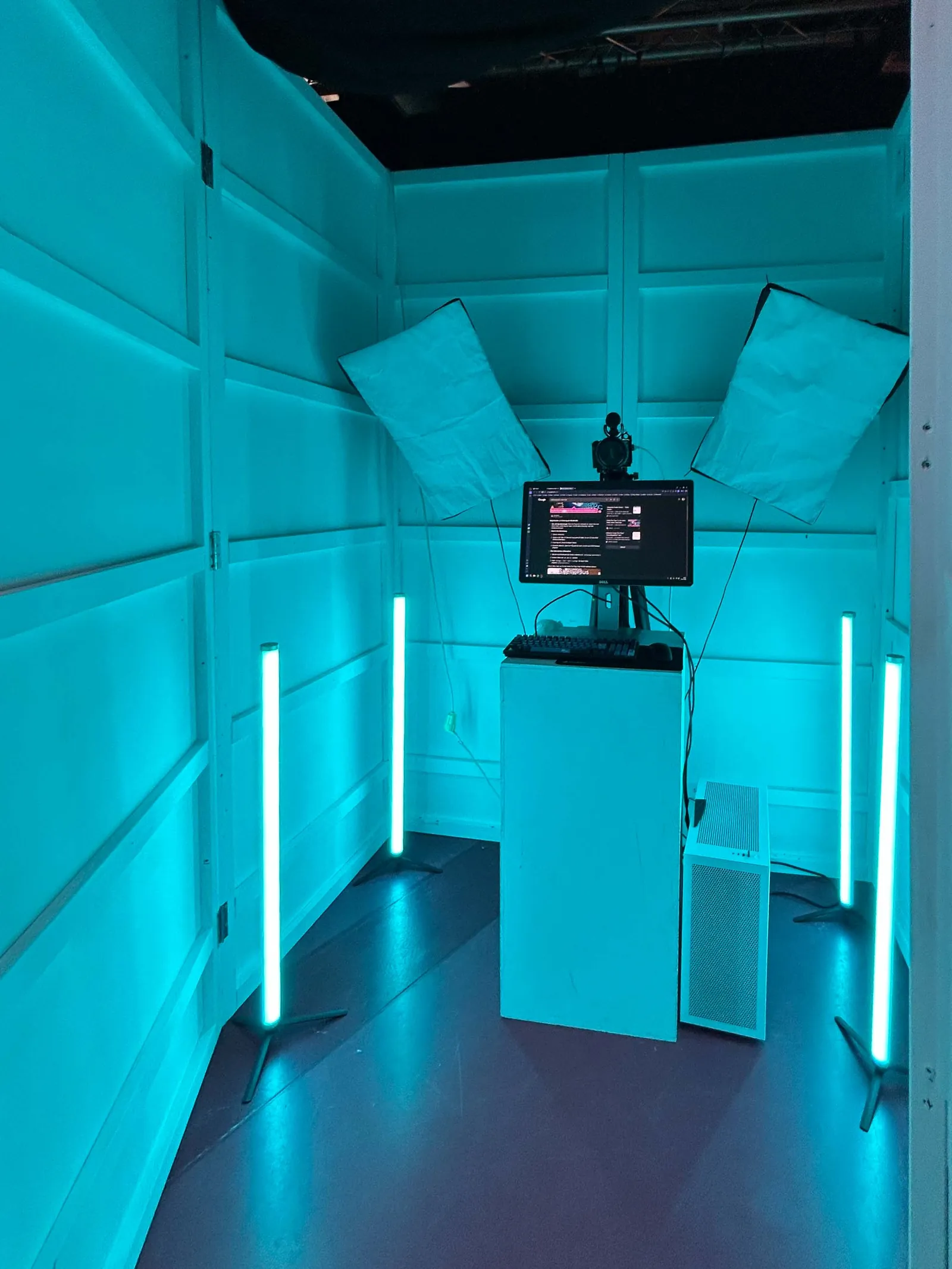
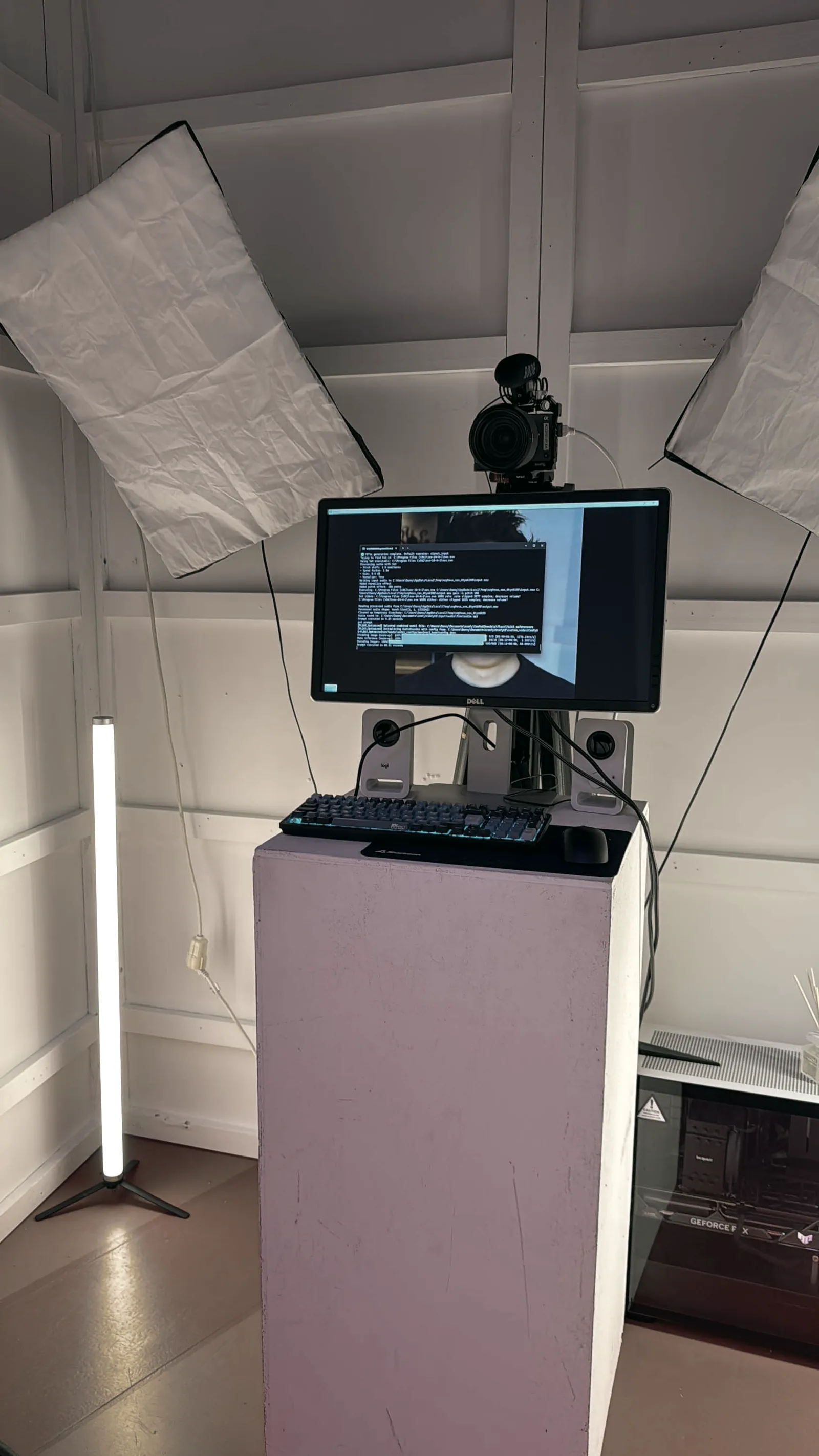
In front of you are a screen, a camera, a microphone and three keys: past, present and future.
- You press a key. A voice explains how the installation works.
- After a five-second countdown the camera takes a photo of you.
- You hold a key and speak for up to ten seconds.
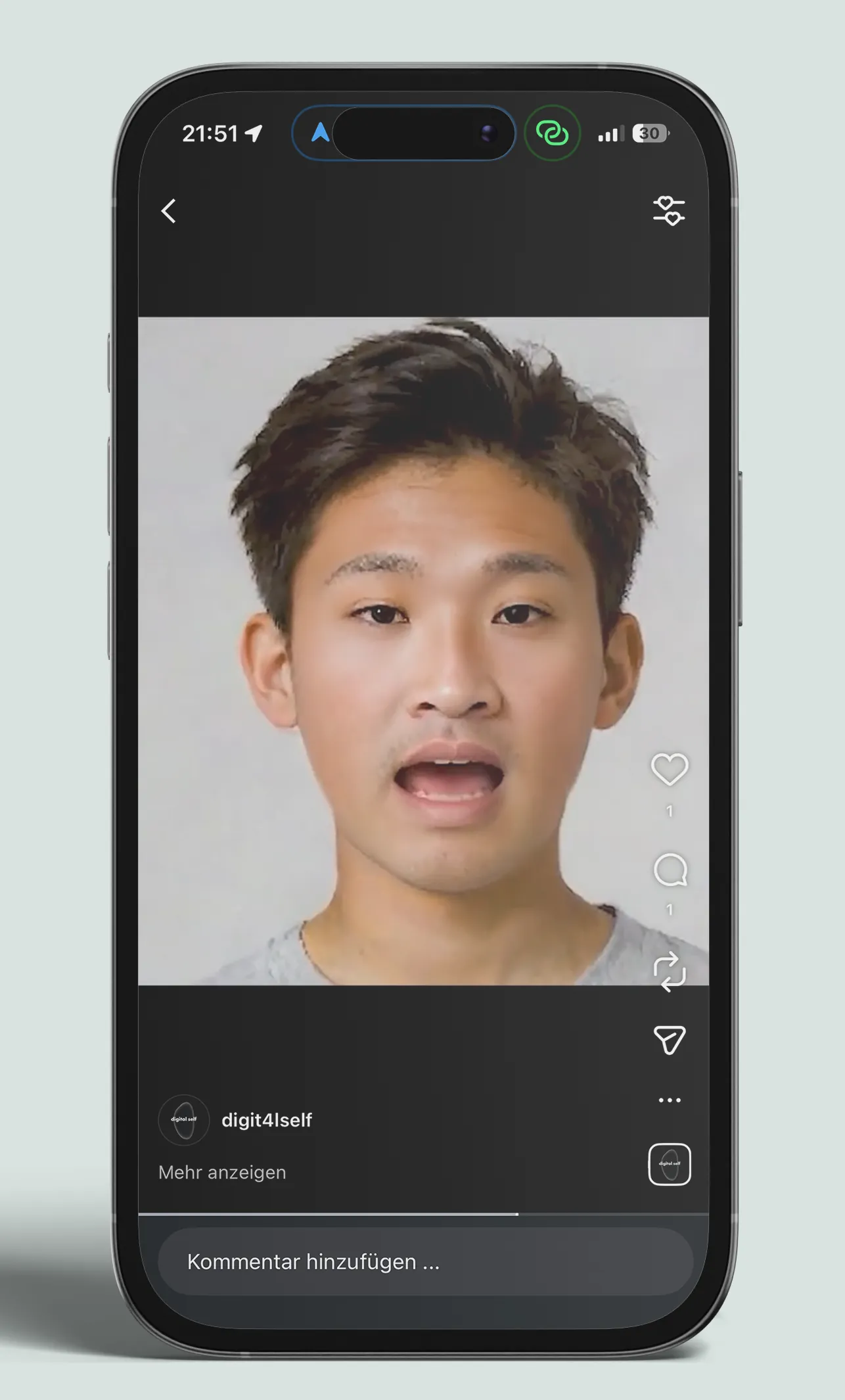
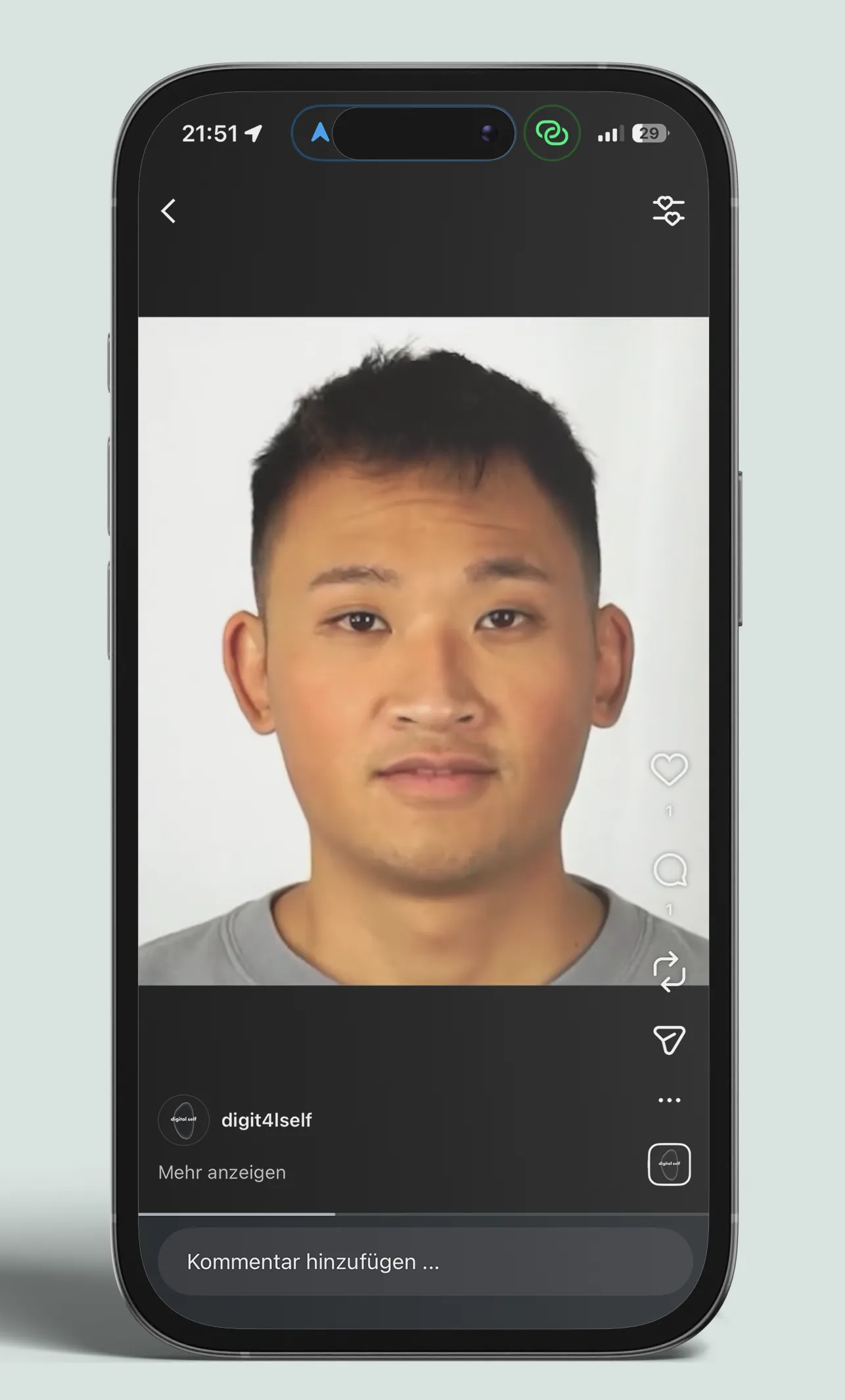
- The system turns the photo and your voice into a video.
- After 30 to 80 seconds your digital self answers. Then you can keep talking.
All recordings are stored only temporarily and deleted at the end of the day. The installation says so right at the start.
The technology
ComfyUI runs in the background with three workflows of my own, one for each age. TouchDesigner controls the sequence, records photo and voice, and plays the finished video.
- Photo + voice
- BLIP
- Stable Diffusion
- ReActor
- F5-TTS
- FLOAT
- Video
- BLIP describes the photo in words.
- Stable Diffusion generates an image at the chosen age.
- ReActor puts your face into that image.
- F5-TTS clones your voice.
- FLOAT turns image and audio into a talking video.
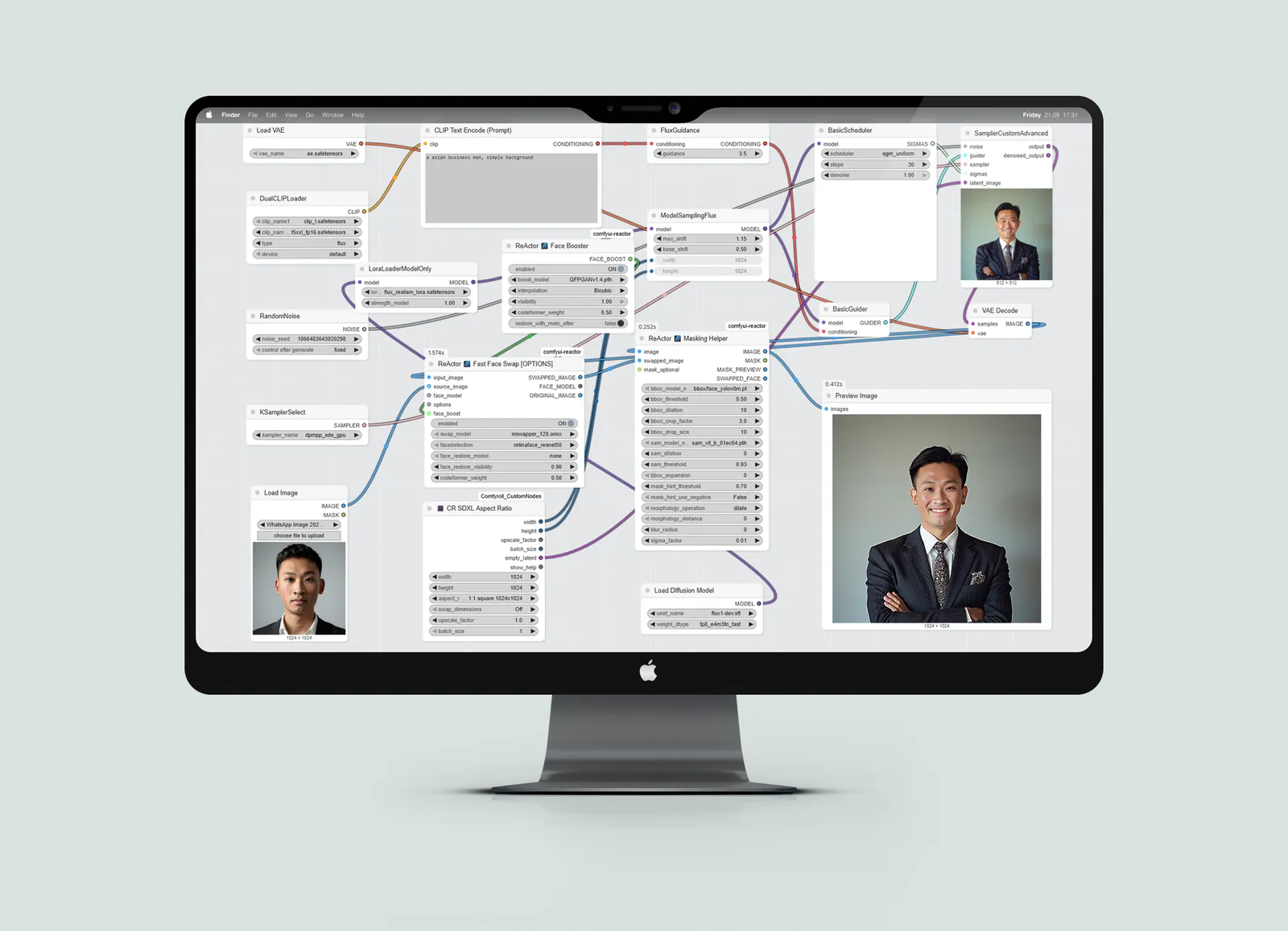
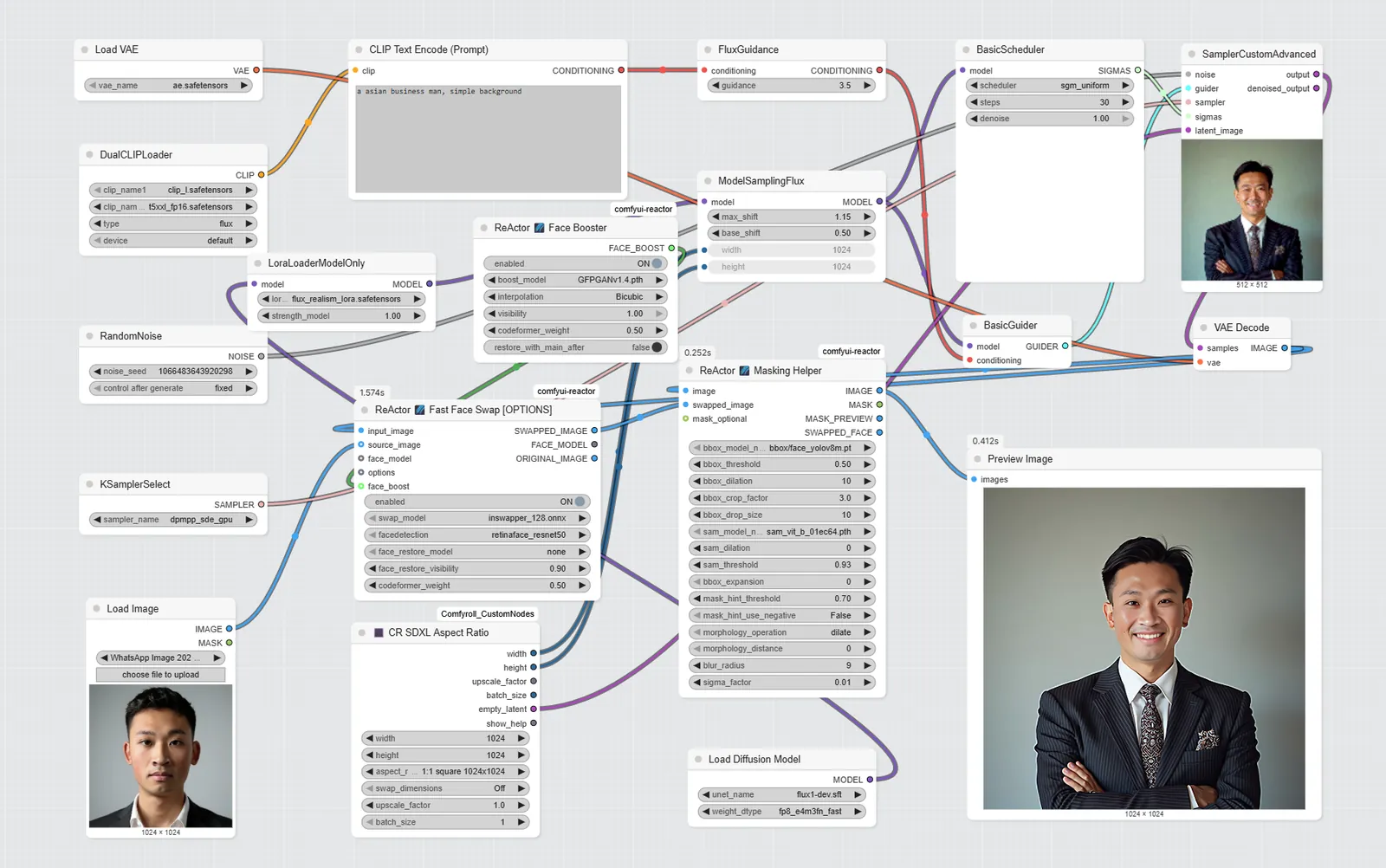
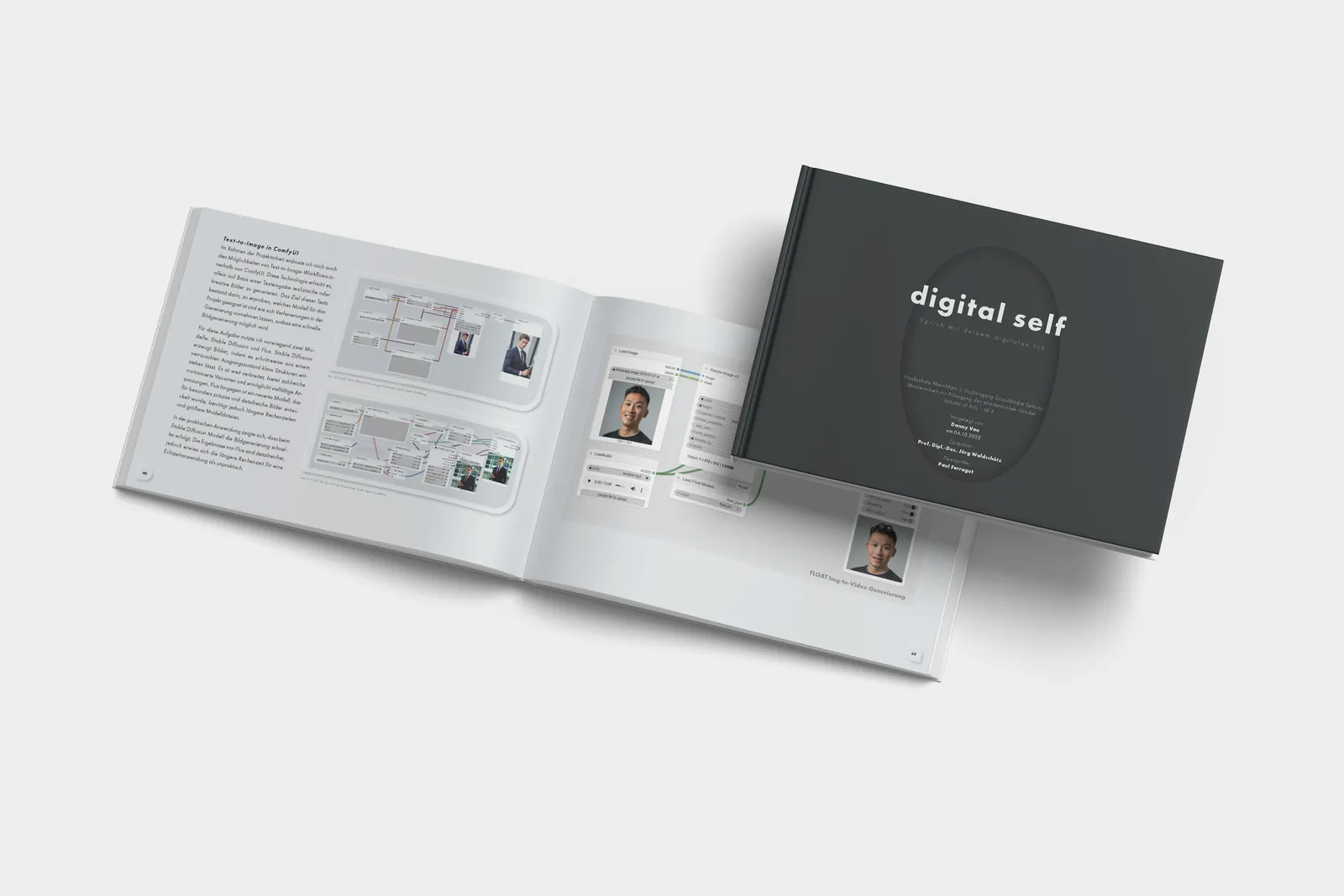
Before the thesis I barely knew ComfyUI or TouchDesigner. So I split the project into single building blocks and got them running one by one: first the voice, then the image, then the face, then the video.


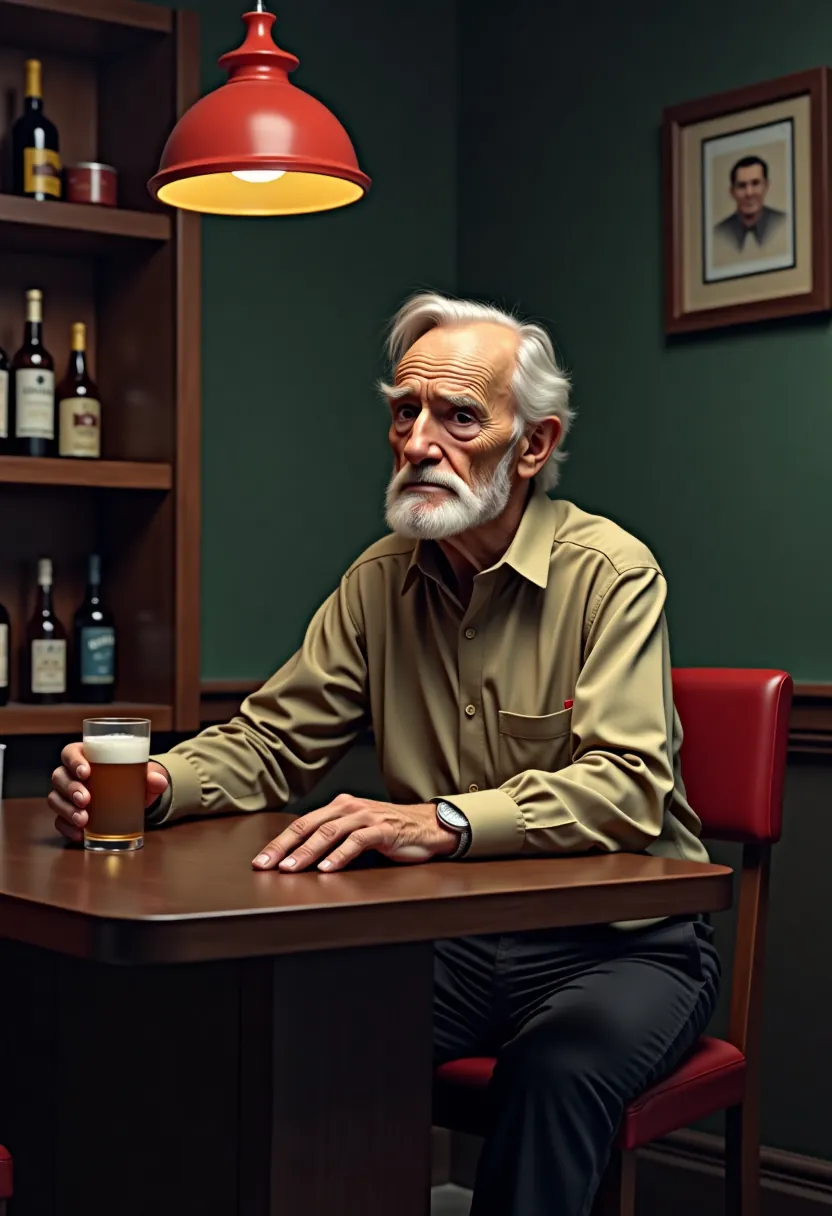
Name and design
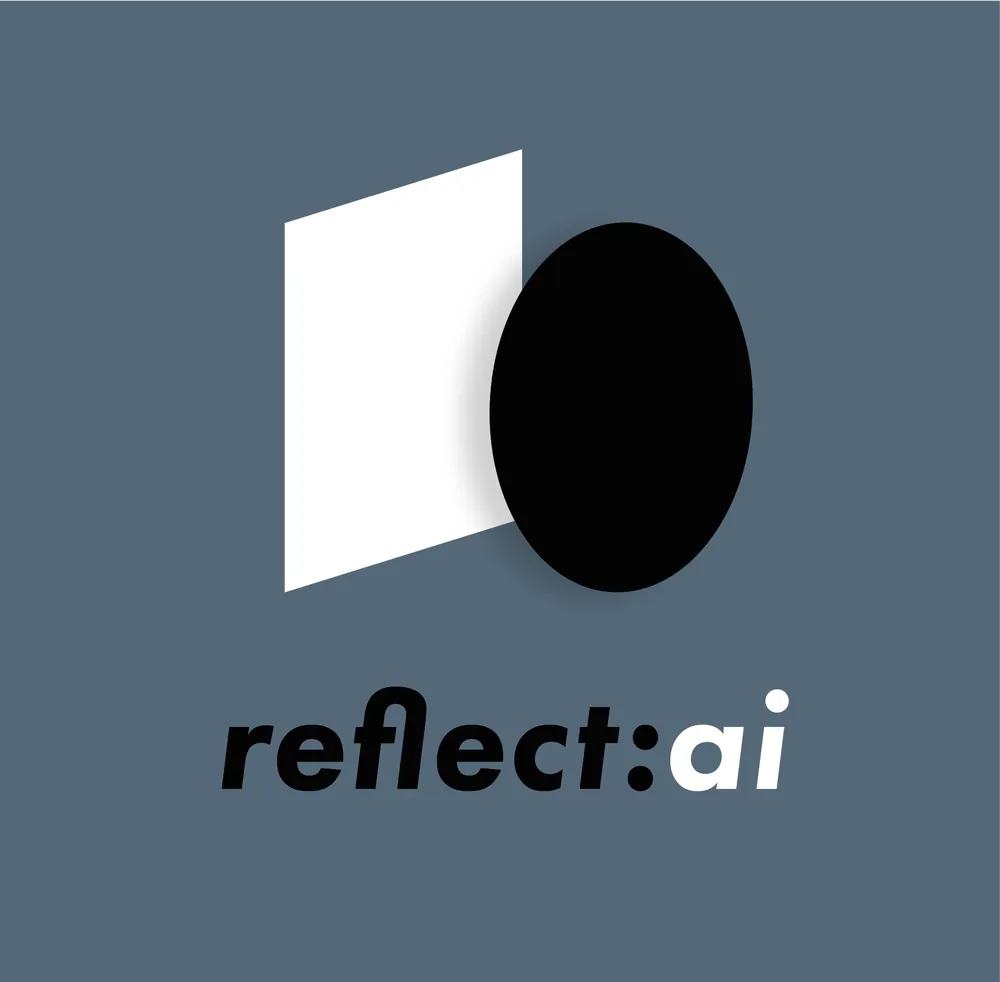
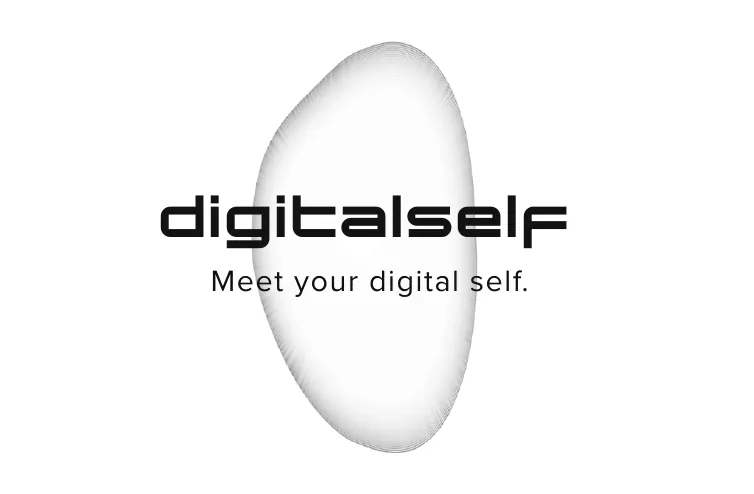
Along the way the project was called deepface:me, reflect:ai and mirror me. In the end it became digital self. That name says most clearly what it is about.
The logo is a shape without a face. The AI has no identity until you talk to it. I left out colour, and the typeface is a Futura. The experience should be the focus, and the surface should stay in the background.

Exhibition
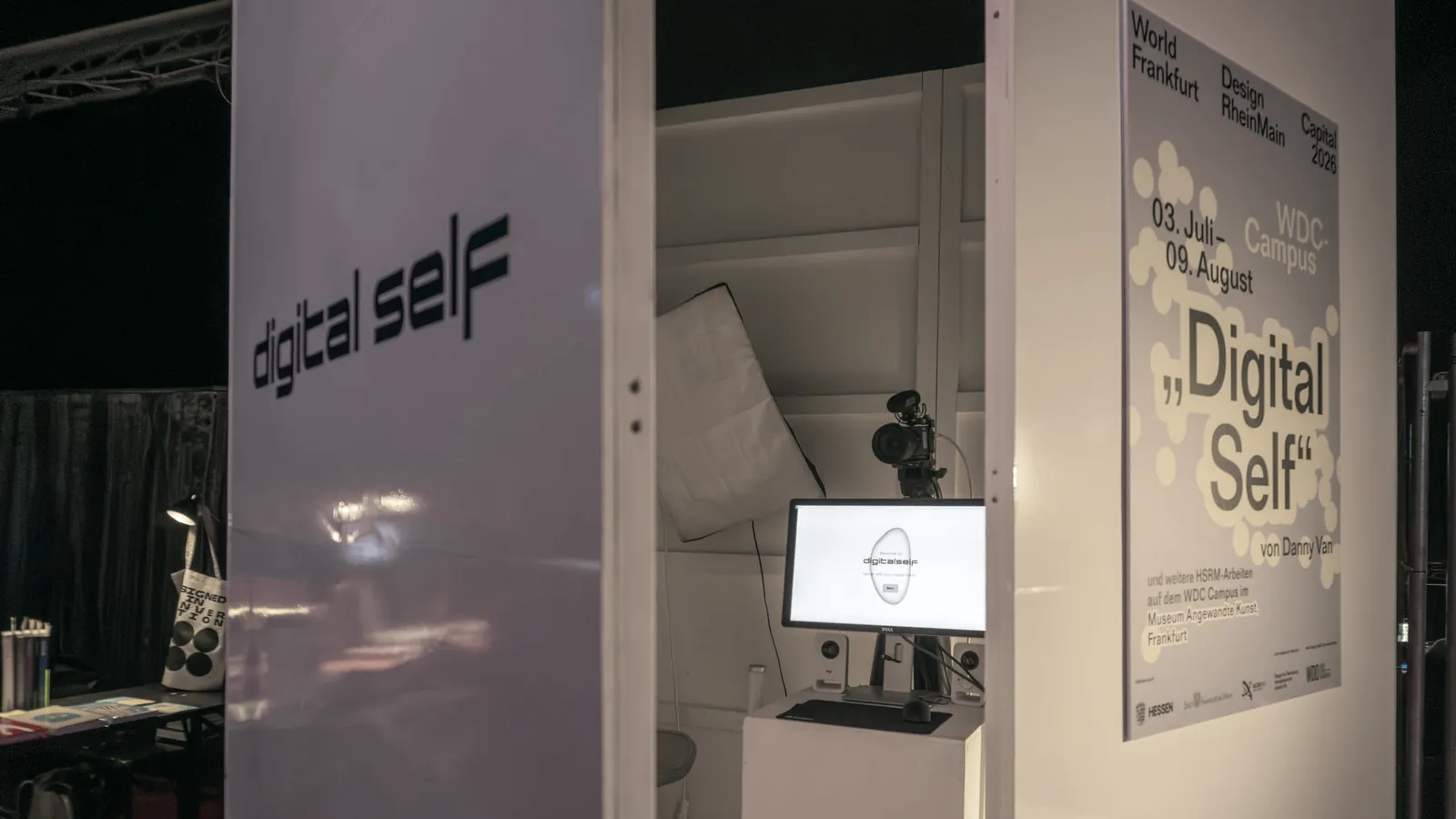
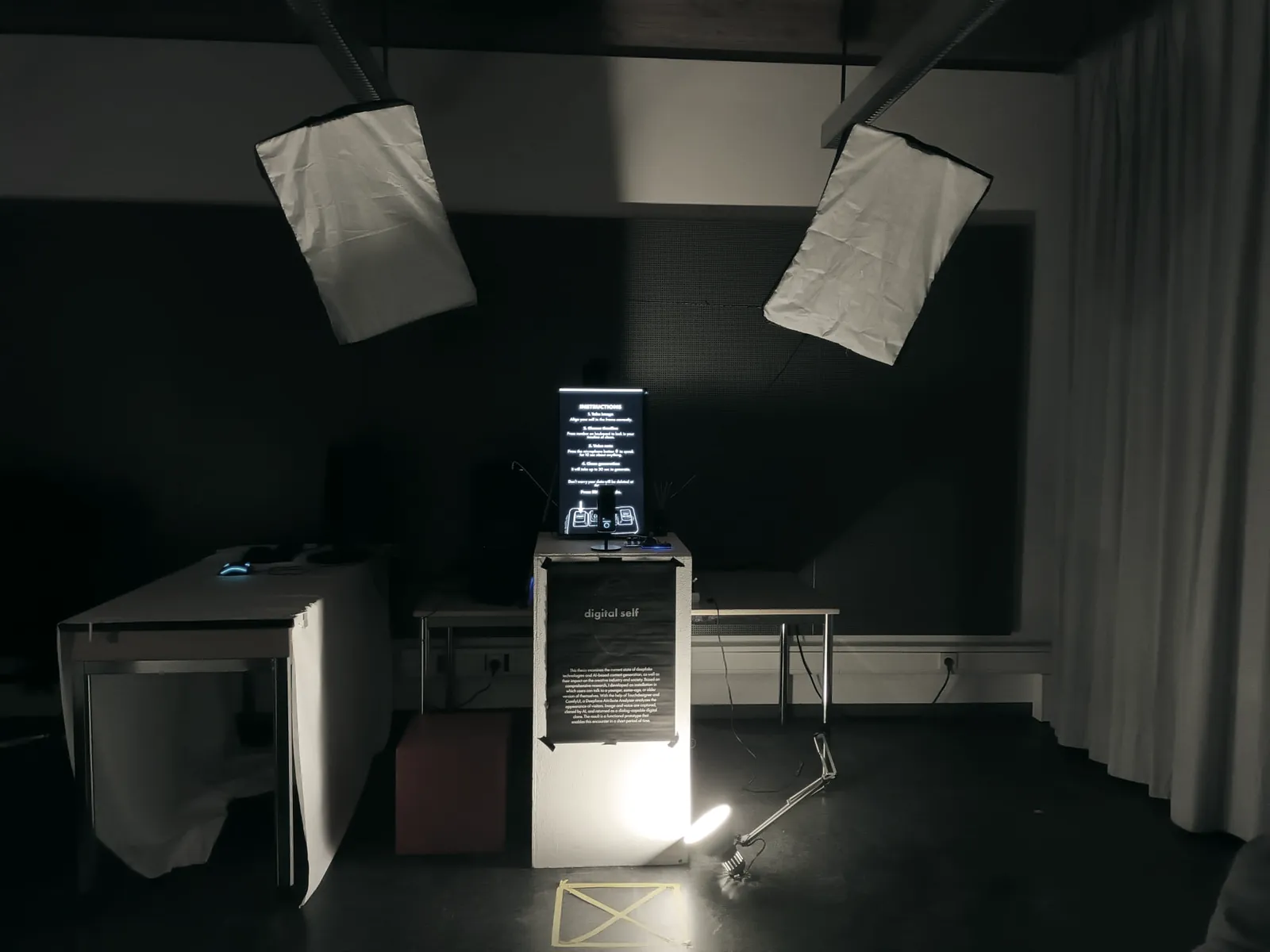
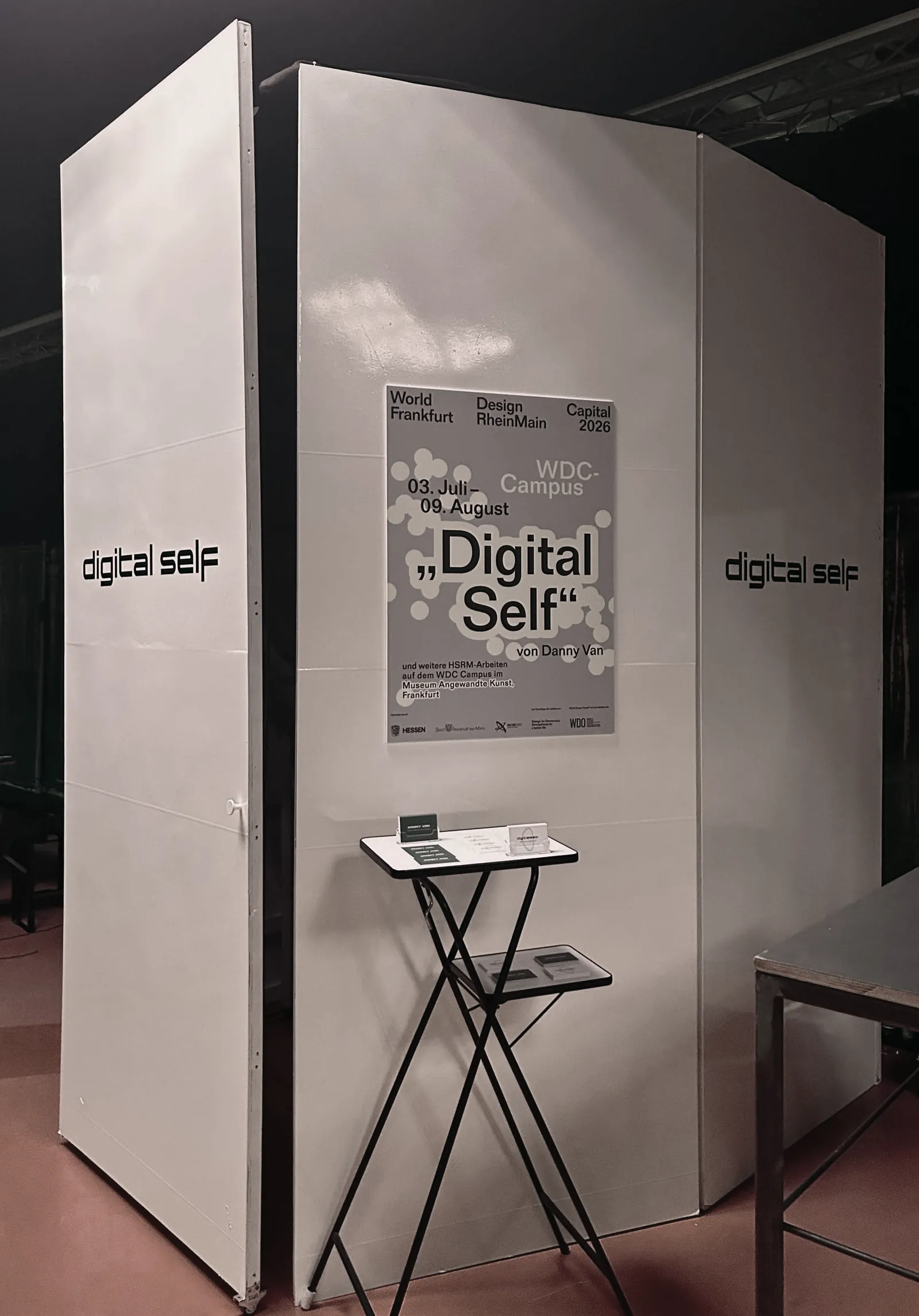
In the thesis the installation still stood open in the room, with a photo backdrop and softboxes. For the exhibitions it became a closed white booth. Whoever stands inside is alone with themselves for a moment.
Digital Self was shown at See Conference in Wiesbaden in April 2026. From 3 July to 9 August 2026 the booth stood at WDC Campus in the Museum Angewandte Kunst in Frankfurt, as part of World Design Capital Frankfurt RheinMain 2026.
Next project
Chef AI